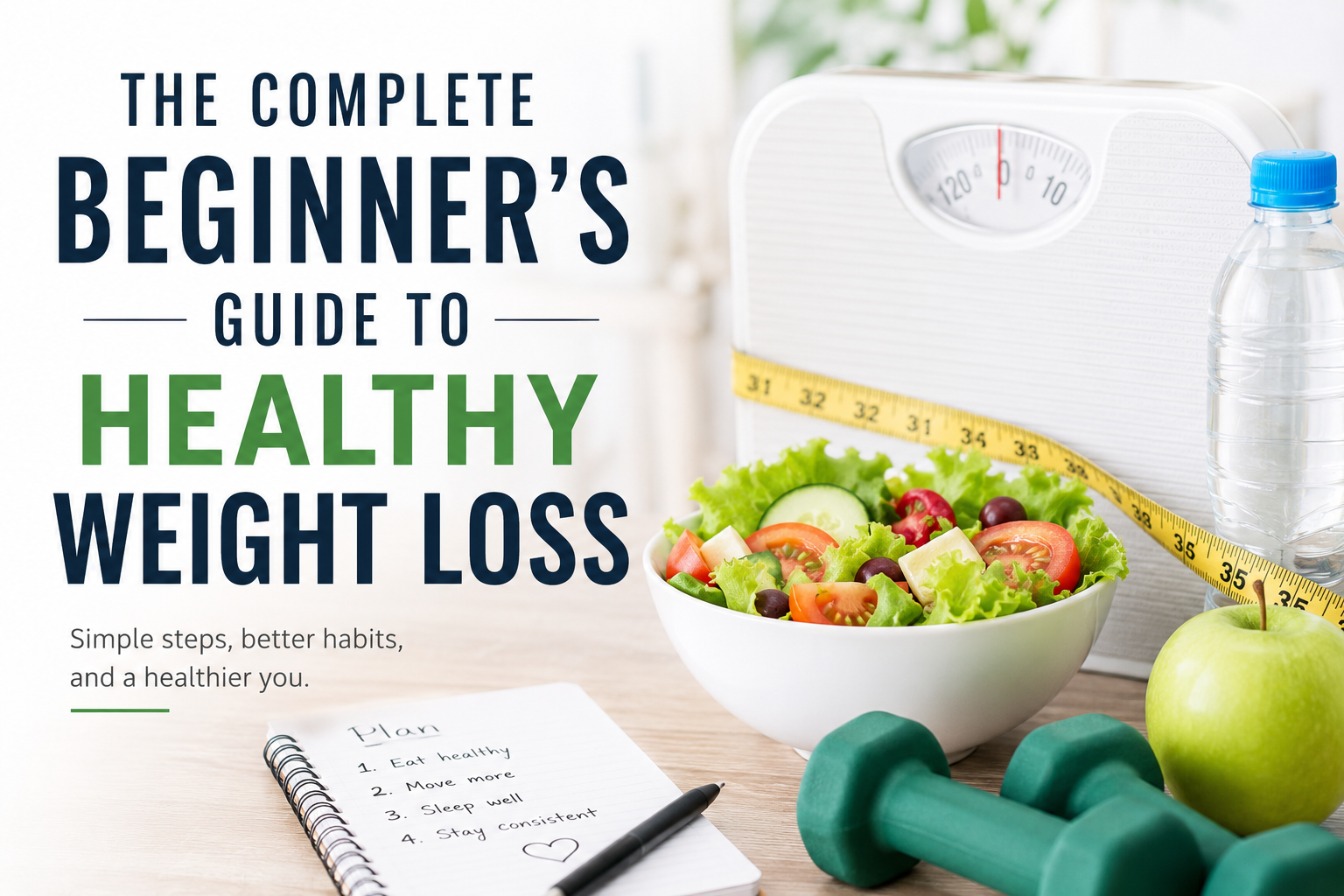
When I first decided to lose weight, I made the same mistake that many beginners make. I thought weight loss was all about eating less and exercising until I was exhausted. I followed strict diets for a few days, skipped meals, and expected quick results. The truth is that healthy weight loss is not about punishing yourself. It is about building habits that you can continue for the rest of your life.
In this guide, I want to share the things I learned about healthy weight loss in the simplest way possible. If you are a complete beginner, this article will help you understand where to start, what to avoid, and how to lose weight in a healthy and sustainable way.
Understanding What Healthy Weight Loss Really Means
Before starting any diet, I believe it is important to understand what healthy weight loss actually means. Healthy weight loss is not losing ten kilograms in one week. It is losing body fat gradually while keeping your energy, muscle, and overall health intact.
A realistic target is usually around 0.5 to 1 kilogram per week. This may sound slow, but it is the safest and most sustainable approach. Rapid weight loss often comes from losing water weight and muscle, which is not what most of us want.
I learned that my goal should not be just a smaller number on the scale. My goal should be better health, more energy, improved confidence, and habits that I can maintain for years.
Why Most Beginners Fail
One thing I noticed is that beginners often fail because they try to change everything at once. They stop eating their favorite foods, start intense workouts, drink only detox drinks, and expect instant transformation.
I have done this myself, and it usually leads to frustration. After a few difficult days, hunger increases, motivation drops, and old habits return.
The better approach is to change one habit at a time. Healthy weight loss is not a 30 day challenge. It is a long term lifestyle change.
Step One: Know Your Starting Point
The first thing I would do is measure my starting point. This does not mean becoming obsessed with numbers, but having a clear picture of where I am.
I would check my weight, waist measurement, and maybe take a front and side photo. Photos are surprisingly helpful because sometimes the scale changes slowly while the body changes visibly.
I also like to ask myself a few questions:
How many meals do I eat each day?
How often do I eat fast food?
Do I drink sugary beverages?
How active am I during the day?
These questions help me identify the habits that are contributing to weight gain.
Step Two: Create a Small Calorie Deficit
Weight loss happens when I consume fewer calories than my body uses. This is called a calorie deficit. Many people think they need a huge deficit, but I have found that a moderate deficit works much better.
Instead of starving myself, I focus on reducing unnecessary calories. For example, I might replace sugary soft drinks with water, reduce large portion sizes, or avoid mindless snacking while watching videos.
A small deficit is easier to maintain and usually causes less hunger and fatigue.
Step Three: Build My Meals Around Protein
If there is one nutrition tip I wish I had known earlier, it is the importance of protein. Protein helps me stay full for longer, supports muscle maintenance, and makes dieting much easier.
Some protein rich foods I would include are:
Eggs
Chicken breast
Fish
Lean beef
Greek yogurt
Lentils
Beans
Cottage cheese
For breakfast, I prefer something simple such as boiled eggs with whole grain bread. For lunch and dinner, I try to include a good source of protein along with vegetables and a moderate amount of carbohydrates.
Step Four: Do Not Fear Carbohydrates
Many beginners think carbohydrates are the enemy. I used to believe this too, but carbohydrates are not inherently bad. The problem is usually the quantity and the source.
I try to choose carbohydrates that keep me satisfied, such as oats, brown rice, whole wheat bread, potatoes, and fruits. These foods provide energy and nutrients that my body needs.
Completely eliminating carbohydrates often makes people feel tired and increases cravings. I have found that balanced meals work much better than extreme restrictions.
Step Five: Eat More Vegetables
Vegetables became one of the easiest tools for weight loss. They are low in calories but high in volume, which means I can eat a larger portion without consuming too many calories.
I try to fill at least half of my plate with vegetables such as cucumbers, tomatoes, spinach, carrots, bell peppers, or any seasonal vegetables available to me.
Adding vegetables to meals helps me feel full and naturally reduces the amount of high calorie foods I eat.
Step Six: Drink Enough Water
I underestimated the importance of water for a long time. Sometimes I thought I was hungry when I was actually just thirsty.
Now I try to drink water consistently throughout the day, especially before meals. Drinking a glass of water before eating can help me avoid overeating.
I also reduce liquid calories as much as possible. Soft drinks, sweetened tea, energy drinks, and sugary coffee can add hundreds of calories without making me feel full.
Step Seven: Start Moving, Even If It Is Just Walking
One of the biggest myths about weight loss is that I need a gym membership before I can lose weight. Walking is one of the best beginner friendly exercises.
When I started paying attention to my daily activity, I realized that I spent most of my day sitting. Simply increasing my steps made a noticeable difference.
I would recommend starting with a target that feels realistic, such as 5,000 to 7,000 steps per day, and then gradually increasing it. Walking is easy on the joints, requires no special equipment, and can be done almost anywhere.
Step Eight: Add Strength Training
Although walking is excellent, I also believe that some form of strength training is extremely valuable. The goal is not necessarily to become a bodybuilder. The goal is to maintain or build muscle while losing fat.
Muscle helps improve body composition and can make the body look leaner even if the scale does not change dramatically.
Beginners can start with simple bodyweight exercises such as:
Squats
Push ups
Lunges
Glute bridges
Planks
Even two or three short sessions per week can make a significant difference over time.
Step Nine: Sleep Is Part of the Plan
I used to ignore sleep completely. I would stay up late and then wonder why I was constantly hungry the next day.
Lack of sleep can increase cravings, reduce energy for exercise, and make healthy choices much harder. I try to aim for seven to nine hours of sleep whenever possible.
A simple evening routine such as reducing screen time, keeping the room cool, and sleeping at a consistent time can help improve sleep quality.
Step Ten: Learn How to Handle Cravings
Cravings are normal. I do not believe that successful people never crave unhealthy food. The difference is how they respond to those cravings.
Instead of telling myself that I can never eat my favorite foods again, I allow them in moderation. If I want a burger or dessert, I can still enjoy it occasionally without turning it into an all day cheat binge.
This mindset has helped me stay consistent because I no longer feel trapped by my diet.
What I Eat in a Typical Day
To make this guide practical, here is an example of a simple beginner friendly day of eating.
Breakfast
Two boiled eggs, one slice of whole grain bread, and unsweetened tea.
Lunch
Grilled chicken, one cup of rice, and a large salad.
Snack
A fruit such as an apple or banana with a handful of roasted chickpeas or nuts.
Dinner
Fish or lentils with vegetables and a small portion of roti or potatoes.
This is not a magic meal plan. It is simply an example of balanced eating that includes protein, fiber, healthy fats, and carbohydrates.
How I Track Progress
I have learned that daily weight fluctuations are completely normal. Water retention, salt intake, exercise, and even sleep can change my weight from one day to another.
Instead of reacting to every number, I prefer to weigh myself under similar conditions and look at the weekly trend. I also pay attention to:
Waist measurements
How my clothes fit
My energy levels
My strength during workouts
These indicators often provide a better picture of progress than the scale alone.
Common Mistakes I Would Avoid
If I were starting again from zero, I would avoid these mistakes:
Skipping meals to save calories
Doing hours of cardio every day
Cutting out entire food groups
Depending on detox teas or fat burners
Comparing my progress with other people
Healthy weight loss is not a race. Everyone starts from a different place and loses weight at a different pace.
Staying Motivated When Results Are Slow
There were times when I felt discouraged because progress seemed slow. What helped me was focusing on the process instead of the outcome.
I would ask myself:
Did I drink enough water today?
Did I eat enough protein?
Did I move my body?
Did I get adequate sleep?
If I kept winning these small daily actions, the results eventually followed.
Final Thoughts
In my opinion, the complete beginner’s guide to healthy weight loss can be summarized in one sentence: make small changes that you can continue for the rest of your life.
I do not need the perfect diet, the hardest workout, or the fastest transformation. I need consistency. Drinking more water, eating enough protein, adding vegetables, walking regularly, sleeping well, and being patient are the habits that create lasting results.
Weight loss may begin with the desire to look better, but along the way it often becomes about feeling stronger, healthier, and more confident. The best time to start is not when everything is perfect. The best time is today, with one small healthy choice at a time.
